

What It Can Tell You About Your Building
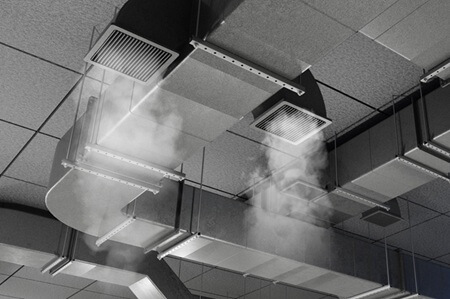 Something feels off in the building. One area always feels stuffy. Employees keep reporting an odor. Complaints disappear for a while, then come back. The HVAC system seems to be running normally, but something still isn’t right.
When the cause isn’t obvious, indoor air quality testing gives you a way to stop guessing and start narrowing down the problem. By looking at conditions such as ventilation, airflow, moisture, airborne particles and gases, testing can reveal patterns and potential problem areas that aren’t always easy to spot.
But getting the readings is only part of the process. Understanding what they mean in the context of your building is what helps determine where to look next. Here’s what to expect from commercial indoor air quality testing and how the findings can help guide your next step.
What Happens During Commercial Indoor Air Quality Testing?
Commercial indoor air quality testing typically starts with understanding the building and the concern before any measurements are taken.
The process may include the following steps.
1. Start With the Problem
Testing starts with understanding the concern and where it is happening.
The technician may ask about odors, discomfort, moisture, recent renovations, occupancy changes and HVAC schedules. This helps identify where testing should focus.
2. Look at the HVAC and Ventilation System
Because indoor air quality and HVAC performance are closely connected, technicians look at how the building brings in, filters, exhausts and moves air. They also check how the equipment is operating.
The goal is to understand how air is moving through the building and whether certain areas or operating conditions may be contributing to the concern.
3. Take Real-Time Readings
Portable instruments can provide immediate measurements inside the building.
Technicians may compare readings between rooms, indoor and outdoor conditions, or different times of day. These results can also help determine whether additional sampling is needed.
4. Sample Specific Areas When Needed
If the initial readings point to a specific concern, the next step may be targeted air or surface sampling.
This can be useful when investigating issues such as mold or other biological contaminants that cannot be confirmed with a handheld meter alone.
5. Send Samples to the Lab When Needed
Some samples need to be sent to a laboratory for a closer look.
The lab results are then reviewed alongside the testing location, building conditions and HVAC findings to help explain what may be happening in the space.
6. Connect the Findings
The final report should turn the data into information the facilities team can use.
It may include measured conditions, areas of concern, possible contributing factors and recommended next steps. This gives building teams documented information to review and act on rather than relying on assumptions.
7. Monitor Conditions Over Time
A one-time test provides a snapshot. Real-time IAQ analytics can show how conditions change over hours, days or longer periods.
Sensors may track CO2, temperature, humidity or particulate levels alongside occupancy or HVAC operation. When ongoing monitoring is used, sensors should be properly maintained and calibrated, with unusual readings investigated further.
How Do You Test Air Quality at Work?
There isn’t one device that provides a complete picture of indoor air quality. The right tools depend on the problem you’re trying to solve.
Technicians may use CO2 meters, particle counters, moisture meters, thermal imaging, environmental sensors and targeted air or surface sampling. Longer-term sensors can also reveal patterns that a single site visit might miss, especially when readings are compared with occupancy or HVAC operation.
The goal isn’t to use every available tool. It’s to use the right ones to answer the right questions about the building.
What Does an Air Quality Test Detect?
Indoor air quality can be affected by a lot of different things, so testing is usually tailored to the building and the concern.
A commercial indoor air quality assessment may evaluate:
- Carbon dioxide (CO2): Can help show whether ventilation is keeping up with how a space is being used.
- Volatile organic compounds (VOCs): Gases that may come from building materials, furnishings, cleaning products and other indoor sources.
- Particulate matter: Small airborne particles, including PM2.5, that can come from both indoor and outdoor sources.
- Temperature and relative humidity: Conditions that affect comfort and can provide clues about HVAC or moisture problems.
- Carbon monoxide: A combustion-related gas that requires prompt attention when elevated concentrations are detected.
- Mold and other biological material: Targeted sampling may be used when moisture history or other evidence indicates a reason to investigate biological contaminants.
- Ventilation and airflow: Helps show whether fresh air is reaching the areas where it is needed.
- Moisture: Moisture meters and, in some investigations, thermal imaging can help locate conditions that may contribute to indoor air quality concerns.
More readings do not necessarily mean better testing. The most useful measurements are the ones that help explain what is happening in the building.
How Do HVAC Conditions Affect Indoor Air Quality Testing?
Air quality testing in commercial buildings should consider both the space and the HVAC system. How the system brings in outdoor air, moves and filters it throughout the building, and controls temperature and humidity can all affect indoor air quality.
If testing finds an unusual reading, the cause may be tied to airflow, ventilation, filtration, moisture or system operation.
ASHRAE Standard 62.1 provides widely used guidance for ventilation and indoor air quality in commercial buildings. In Colorado, altitude can also affect ventilation calculations.
Finding an unusual reading is only part of the job. The next question is why it’s happening. If the cause points back to ventilation, airflow, filtration, humidity control or equipment operation, the HVAC system becomes part of the investigation. That’s where working with a team that understands both IAQ and commercial HVAC can shorten the path from identifying the problem to correcting it.
When Should a Commercial Building Consider Air Quality Testing?
Air quality testing can be useful when a concern keeps coming up and the cause is not clear. It can also help after building changes or outside events that may have affected indoor conditions.
Testing may make sense when:
- Occupants repeatedly report odors or discomfort
- A building has had leaks or ongoing moisture problems
- Renovations or changes in building use may have affected airflow
- Wildfire smoke or outdoor pollution may be affecting indoor air
- Building teams need documented information to investigate a recurring concern
OSHA recognizes indoor air quality as a workplace concern, although there is no single OSHA standard that covers every IAQ issue. Testing can help building teams document conditions and determine whether a more specific requirement or follow-up action applies.
Looking for ways to improve indoor air quality? From HVAC maintenance and filtration to moisture control and air purification, there are several ways to address the conditions that affect your building. For practical ways to improve the air quality in your building, read our guide on Improving Indoor Air Quality.
Frequently Asked Questions About Commercial Air Quality Testing
How long does commercial indoor air quality testing take?
It depends on the size of the building and what is being investigated. Some readings can be collected during one visit, while lab testing or longer-term monitoring may take additional time.
Do you need to test the entire building?
Not always. Testing can often focus on the areas where concerns have been reported or where the initial walkthrough points to a possible issue. Other areas may be tested for comparison.
Can air quality testing find the source of a problem?
Testing can help narrow down possible causes by showing where unusual readings or patterns are occurring. In some cases, additional investigation may be needed to determine whether the issue is related to ventilation, moisture, HVAC operation or another building condition.
Is one air quality test enough?
Sometimes. A one-time test can provide useful information about current conditions, but problems that come and go may require monitoring over a longer period to identify a pattern.
Can testing be done while the building is occupied?
Often, yes. In fact, testing during normal building use can provide a more accurate picture of how occupancy, airflow and HVAC operation affect indoor conditions.
In some cases, certain types of sampling or investigation may need to be scheduled around occupants, depending on what is being tested.
Stop Guessing at What’s Happening in the Building
IAQ testing isn’t about collecting as much data as possible. It’s about collecting the right data to understand what’s driving the problem and where to look next.
When concerns keep coming back, testing can help connect the dots between what people are experiencing and what’s happening in the building. The findings may point to ventilation, airflow, moisture, filtration or other conditions that need a closer look.
If the issue leads back to the HVAC system, Chiller Systems Service can evaluate the equipment and building conditions involved, identify potential causes and help determine the right next step.
Explore Chiller Systems Service Indoor Air Quality Services.